Library Programs
Dia Crafts and Activities
Papel picado banners, marigold bookmarks, make a book cover and story puppets: quiet crafts that keep children making between story times.
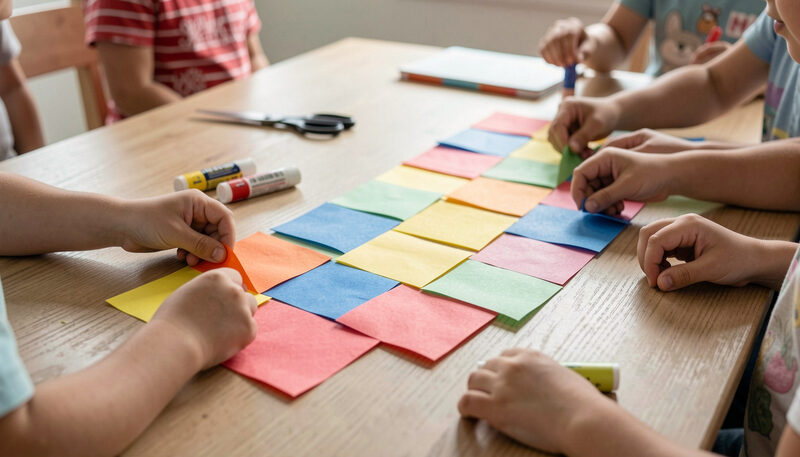
Craft tables hold a Día program together. While the story corner runs its schedule and the browsing table does its quiet work, the craft table gives children something to make with their hands and gives their grown ups fifteen minutes to sit down. The four crafts below cost little, scale to any crowd, work from toddler to age ten with small adjustments, and each one connects to the celebration's themes: books, cultures, languages and spring. Each plan lists materials, steps, ages and cleanup, the way a program sheet actually needs them.
Why crafts belong at a book party?
Because a craft is a book talk that children give themselves. A child who folds a papel picado banner or threads a marigold bookmark walks out wearing the celebration, and the grown up walking out with them now has a reason to say yes at the browsing table. Crafts also occupy the guests the story corner cannot hold at once, which is how a room built for thirty serves a hundred. The old Texas program that lived on this domain shipped a bookmark template among its program files for exactly this reason: the cheapest piece of paper at the event was also the one most likely to still exist, in a book, a year later.
Craft one: papel picado banners
Papel picado, the cut paper banners flown at Mexican celebrations, is the signature Día craft. Materials per child: six sheets of colored tissue paper, safety scissors and tape. Fold a sheet in quarters, cut shapes along the folds, unfold, and tape the sheets to a length of string. Younger children cut random notches and are delighted anyway; older children plan symmetrical designs. Age three with help to age twelve. Cleanup is the craft's one warning: tissue scraps travel, so put a drop cloth under the table and sweep before the story corner's last session, or the flags will compete with confetti on the floor.
Craft two: marigold bookmarks
The marigold, cempasúchil, is the flower of remembrance and celebration across Mexican tradition, and a bookmark keeps it useful all year. Materials: card stock strips cut to two by six inches, orange and yellow paper circles in three sizes, glue sticks and a single hole punch for a ribbon tail. Children layer the circles from large to small, glue them at the top of the strip and thread a ribbon through the punch. Ages four to ten, ten minutes of table time, almost no cleanup. This is the craft to hand a volunteer who has never run a table: the steps fit on an index card and nothing about it can fail.
Craft three: make your own book cover
Set out plain paper covers folded around discarded books, crayons, markers and stickers, and let children design a jacket for a book only they have read. The prompt card on the table says: draw the cover, write the title, tell a neighbor what happens. It is a craft, a writing activity and a story starter in one, which is why teachers borrow it for the classroom week after the event. Ages five to twelve, fifteen minutes. The quiet magic appears at the browsing table afterward, when a child who has authored one cover wants to see what authors who got paid look like, and the booktalk scripts in The Dia Tool Kit are waiting for that moment.
Craft four: story puppets on sticks
Print simple line drawings of folk tale characters, or let children draw their own, glue them to craft sticks and add yarn hair. Ten minutes of making buys twenty minutes of play, and a bucket of finished puppets becomes the cast of an improvised story time: one adult narrates while children hold up characters as they are named. Ages three to nine. Puppets pair naturally with the readers theater chapter of the tool kit for school age groups; younger siblings just walk around being roosters.
How much does the craft table cost?
Priced from a general merchandise store, a hundred child celebration runs on tissue paper, card stock, sticks, glue, ribbons and tape for roughly the cost of two hardcover picture books. Tissue and tape are the only items that run out fast, so buy double and store the surplus labeled for next year. The funding paths that can absorb even this modest bill, from Friends groups to the mini grants that replaced the old Texas application, are laid out in Funding a Dia Program: Grants and Budgets.
How do you staff the table for two hours?
Two adults, or one adult and two teen volunteers, hold a craft table for a rolling crowd. The adult sets up, keeps the supply boxes closed until needed and decides when to stop refilling; the volunteers restock, praise liberally and sweep. Post the steps of the current craft as three pictures at a child's eye level so the table explains itself. Rotate a fresh craft in at the halfway mark to give returning families something new. The full staffing plan for the afternoon, slots and names, belongs to the run sheet described in How to Plan a Dia Event at Your Library.
What if a family wants to keep going at home?
Print a half page take home sheet with all four crafts in six lines each, in English and Spanish, and let the craft table be the door to the rest of the magazine: the same hands that fold tissue paper can hold a book, and the routines that make that happen nightly are in Reading Aloud in Two Languages at Home. A craft ends; a bookmark, by design, does not.