Reading at Home
Reading Aloud in Two Languages
Read aloud in two languages without perfect fluency: shared reading tricks, switching languages mid book and routines for busy weeks.
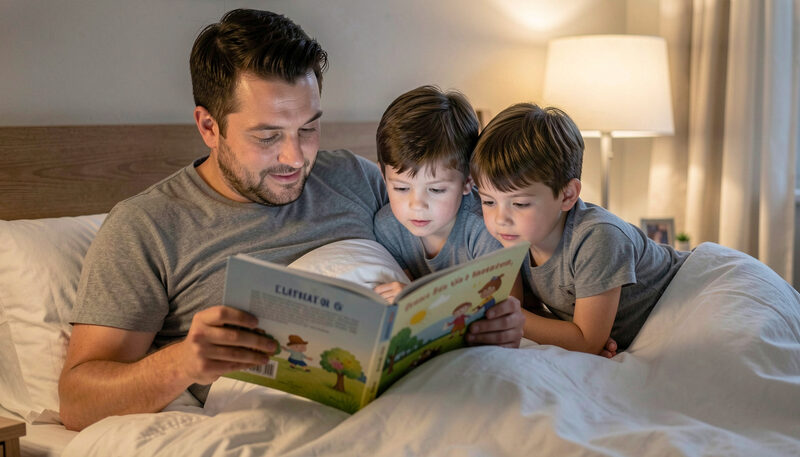
Reading aloud is the one home habit that reliably builds readers, and in a bilingual family it carries a second load: it keeps both languages in the child's ear. Parents often hesitate at the same point, worrying that their English or their Spanish is not good enough to read aloud. It is. This guide shows how families read the same book across two languages, what to do when fluency is thin, and how to build a routine that survives a working week, written for the parent doing it at the end of the day.
Why does reading aloud carry both languages?
Because a child learns a language from being bathed in it, and a book is a bath you can schedule. The read aloud builds vocabulary, attention and the shape of a story, and it does this in whichever language it happens in. In homes where school pulls children toward English and daily life pulls toward the home language, the read aloud is the one place the family decides the balance. Reading Rockets, the national literacy project, summarizes decades of research on reading aloud in plain language: frequency matters more than performance. Ten minutes nightly in the language you love beats an hour monthly in the language you fear.
Do you read one book twice or two books once?
Both work, with different effects. Reading the same book twice, once in each language, teaches translation as an idea: the child sees that stories travel between languages and stay themselves. Parallel text editions, where both languages sit in one book, make this easiest, and the formats are explained in Bilingual Picture Books for Story Time. Reading two different books, one per language, doubles the stories and suits children who resist repeats. Follow the child's preference; a routine the child defends survives, a routine imposed on them does not.
What if your second language is weak?
Then use the tools and keep going. Read the home language book yourself, and let the second language come from the book itself: audio editions, bilingual story times at the library, and videos of authors reading their own work are all legitimate readers. Read a bilingual edition aloud in your strong language and point at the words of the other as you pass them. Say, when you meet a word you do not know, that you will learn it together, and then do; a parent modeling how to handle not knowing is teaching more than pronunciation. The goal is a child who trusts books in two languages, not a parent with a perfect accent.
What does a sustainable routine look like?
One slot, nightly, ten minutes, same place. The slot attaches to something already daily: after the bath, before the light goes off, at the breakfast table while the cereal softens. The books live where the reading happens, a basket by the bed, a shelf at the child's height, so the routine does not depend on remembering. Alternate languages by the day or by the book, written on a calendar the child can read, because children love owning the schedule. Miss a night without ceremony and resume the next; the routine that survives imperfection is the one that lasts years.
How do you read aloud past the picture book years?
You keep going, and you change the job. A chapter a night of a middle grade novel, read in the language you read best, still builds the older child's ear and vocabulary, and it buys the ten quiet minutes that age otherwise refuses. Let the child read a page, a paragraph or a chapter back in the other language when they want to, and never force the turn. The selection of what to read at that age has its own guide in Own Voices Chapter Books for Older Readers, and the summer version of the routine, with its weekly structure, is planned out in A Bilingual Summer Reading Plan.
What about mixed audiences, siblings and cousins?
Mixed ages are the normal case at a Día story time and in most living rooms, and the fix is the same: books with repeated lines and cumulative structure carry everyone from three to nine. Read to the oldest enough that they stay, and let the youngest wander; attention at the edge of the rug still counts. Older children can be given the job of reading one book to the younger, which flatters them into fluency. The librarian's version of this craft, running a story corner for a rolling crowd, is demonstrated in The Dia Tool Kit, and the family version is the same skill with more blankets.
How do you know it is working?
By the small signs, not the test scores. The child brings you the book. The child corrects your page turn. The child supplies the rhyming word in the language you did not read last night. The child reads to a younger cousin, unprompted, doing the voices. Each of these is the habit compounding, and each came from ten unremarkable minutes on ordinary nights. That is the quiet work Día celebrates every April 30, and it is done the other 364 days, at home, one basket of books at a time.