Book Lists
Bilingual Picture Books for Story Time
See how bilingual English Spanish picture books work at story time, what to check before buying and how to match titles to ages and language goals.
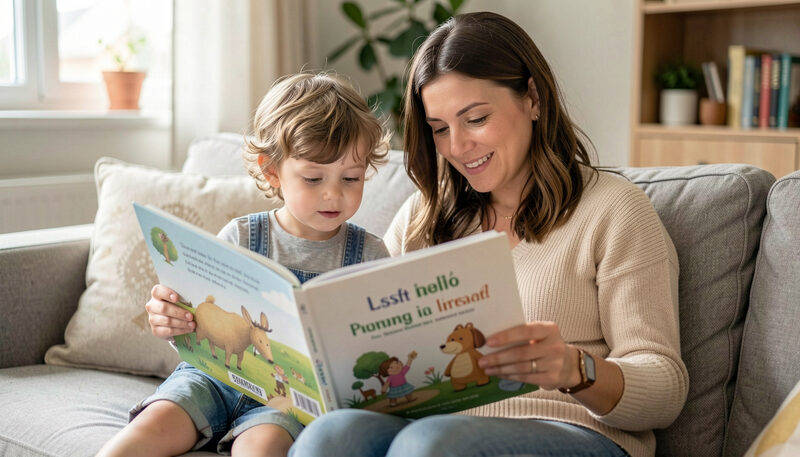
A bilingual picture book does two jobs at once: it gives a child a story and it gives two languages a place to meet. At a Día story time, in a dual language classroom or on a living room floor at bedtime, the bilingual edition is the workhorse of the shelf. This guide explains the formats these books come in, the checks worth making before a title reaches a child's hands, and how to match a stack of them to the ages and language goals of the room in front of you.
What formats do bilingual books come in?
Three, and the difference matters at story time. Parallel text editions print the full story twice, English on one half and Spanish on the other, or the two languages above and below each other; a reader chooses one language and stays with it. Interleaved editions alternate by page or spread, which suits a two voice reading. Embedded editions weave a second language into the story itself, an English sentence with a Spanish word inside it, the way many families actually speak. None is best. Parallel text serves a story time with mixed listeners; embedded text serves a family building one language; interleaved text serves two confident readers sharing a book.
What should you check before buying?
Five checks catch most problems. Read the Spanish aloud, or have someone who can: translations range from graceful to machine stiff, and a clunky rhythm kills a read aloud. Check which text drives the page turns; in a good edition, either language can carry the pace. Look at who the book is about and who wrote it, a book about a Mexican American family written from inside that experience reads differently from one written at a distance. Check the glossary and pronunciation guides actually match the text. Finally, check the physical book survives a toddler: gutter placement of art, page weight, and a spine that lies somewhere near flat.
How do the national lists help?
You do not have to build a list alone. The Association for Library Service to Children publishes fresh Día book lists each spring at dia.ala.org, grouped by age and chosen for exactly this celebration. Colorín Colorado, the bilingual project serving educators and families of English learners, maintains selection guidance for multicultural and bilingual titles with the classroom in mind. Use the national lists as the spine of your order, then apply the five checks above to each title for your specific room. The habit of rebuilding the list each year, rather than photocopying an old one, keeps dead translations and out of print surprises out of the story corner.
Which books work at a mixed age story time?
A Día crowd runs from babies in carriers to eight year olds on the rug edge, so choose structure over theme. Books with repeated lines let the youngest join by the third repetition and let the oldest shout it by the fifth. Cumulative tales, where each page adds one thing to the pile, hold a wide span. Concept books with strong art, counting, colors, animals, work across ages in both languages. Aim for three books at a story time: one repeated line book to open, one longer story for the middle, one visual book to close while attention fades. Rotate the driving language across the three rather than translating each book live.
How do you read one aloud to two languages?
Read the book in the language it reads best in, then let the book's format do the bilingual work: the parallel text carries the second language for the families following along, and the embedded word teaches the room something out loud. Point at the pictures, not at the words. When a child supplies a word in the other language, take it and keep going. The full method, including what to do when your own second language is thin, is laid out in Reading Aloud in Two Languages at Home, and the same rules govern the story corner at a library event, where the formats are demonstrated in The Dia Tool Kit.
What about toddlers and babies?
Board book editions carry the day under age three: fewer words, chewable pages, art that reads from three feet away. The bilingual board book shelf has grown fast, and the same five checks apply with one added, that the words on the page are few enough to survive being read forty times. A toddler who owns eight books before preschool arrives with a working sense of how a page turns and what a story shape is. The toddler years are also when the home language either gets book support or does not, which is the quiet argument for giving bilingual board books as the giveaway at any Día event.
Where do you go after picture books?
When readers chapter past the picture shelf, the same selection instincts scale up: chapter books and middle grade novels with bilingual and bicultural interiors, chosen with the same inside voice check. That path, with the habits that keep older readers reading in two languages, continues in Own Voices Chapter Books for Older Readers, and the summer structure that keeps both languages alive between school years is planned in A Bilingual Summer Reading Plan.