Reading at Home
A Bilingual Summer Reading Plan
Build a summer that carries both languages: library cards, weekly stacks, read aloud slots and simple records children keep themselves.
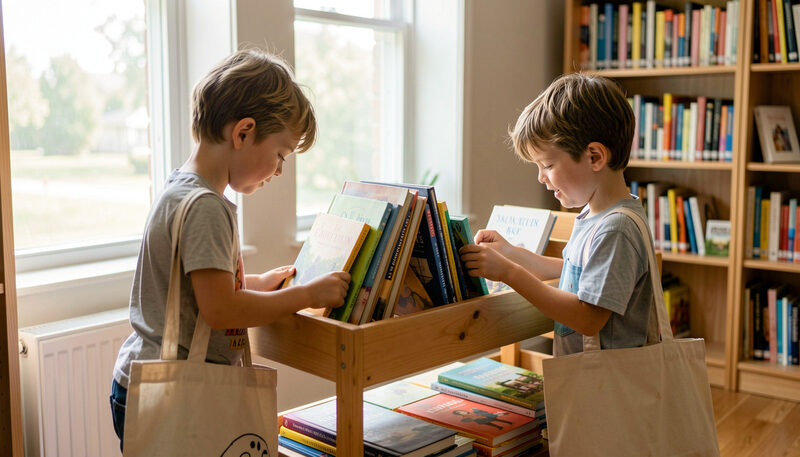
Summer is where bilingual reading either compounds or slips. The school year scaffolds both languages with teachers, libraries and homework; the summer removes the scaffold and leaves the family in charge. The stakes are well known to educators, who talk about summer slide in reading generally, and the bilingual family faces a doubled version: two languages to keep alive with no school's help. A plan fixes this, and it does not need workbooks. It needs a library card, a weekly stack of books and a routine children can run themselves.
Why does summer need a plan at all?
Because reading volume in the summer predicts reading level in the fall, and nothing in a summer day makes reading happen by itself. The public library is the one free institution built for exactly this gap: air conditioning, unlimited books, programs three days a week and librarians whose job is to know what your children will like. A family that puts the library on the calendar the way it puts soccer on the calendar arrives in August with readers. A family that means to, and does not, arrives in August with the same gap the school spent the spring closing.
What does the weekly stack look like?
Six books per child per library visit, chosen on a simple pattern: two in each working language, plus two free choices in any language at all. The pattern keeps the balance without policing it; the free choices keep the child invested, because choice is the engine of summer reading. Let the child carry the stack and hand over the card at checkout, since ownership of the transaction is part of the ownership of the reading. When a book comes home and falls flat after four pages, return it early without guilt; the stack exists to be culled. The choosing habits for the stack are covered in Bilingual Picture Books for Story Time for younger readers and Own Voices Chapter Books for Older Readers for the chapter crowd.
How do you keep two languages in balance?
With a visible tally, not a rule. A paper on the refrigerator where a child marks a square per book read in each language turns balance into a game the child plays against herself. Aim for rough equality across the summer rather than parity each week, because bingeing a series in one language is reading too. Read alouds still count double at any age, since the ear keeps learning long after independent reading starts, and the nightly slot described in Reading Aloud in Two Languages at Home should run straight through July without ceremony. If the home language starts slipping by late July, add one read aloud slot in it rather than banning the other.
What routines survive a summer schedule?
The ones attached to the summer's own rhythms. Reading before screens wake up, on the porch after dinner, in the car waiting for a sibling's practice, on the floor of the library itself: pick the two that touch your actual days. Libraries do half the work in summer, with story times, reading clubs and performer programs that give the week a spine; sign up for the summer reading club the first week of June, not the third, because the club's momentum fades as camps empty. Keep the basket of library books moving between house and car so a book is always within reach of the bored.
How do children keep records themselves?
Paper, markers, and whatever the child decides counts. A record a child keeps is a record a child reads: the title, a star rating drawn by hand, and one word for the book is enough for a seven year old; a nine year old might keep a list with a favorite line copied out. The library's summer club usually supplies a log, which is fine, and the home version adds the second language tally. Resist upgrading this to anything graded. The record's job is to make the summer visible to the child who did it, and a messy page with smeared stars does that better than a form.
What does August success look like?
Measured loosely, because the point is the habit, not the harvest: a child who read most weeks, in both languages, who has opinions about books and says them, who walks into the first day of school knowing where the library is and what she likes from it. The slide that was coming did not come. If the family is also the party giving type, note that a summer plan is one half of the celebration this magazine is built around, and the other half is on the calendar every April 30; What Is Dia? explains what that day does and how to join it from either side of the circulation desk.
How do you start this week?
Library cards for everyone who lacks one, one visit, six books per child chosen on the two plus two plus free pattern, and a tally paper on the refrigerator tonight. Mark the next visit on the calendar before you leave the building. That is the entire launch. The rest of the plan runs on repetition and library air conditioning, which are free, and it ends the way every good reading summer does: with a stack of books read, a record drawn in marker, and a child who asks to go back.